Quick answer
Plan around one gallery or subject, not the whole museum. Before committing, check the admission option you qualify for, any booking requirements, the complete travel cost, and the facilities you need. Save the entrance details and ticket terms, choose a stopping point, and keep a shorter visit or at-home alternative ready.
Suggested first-visit format: one gallery, three objects, a break and permission to leave. The timing is yours to adjust—not a target to meet.
1. Choose a small reason to visit
Start with a question: “What would I enjoy looking at today?”
Your answer might be landscape paintings, local history, ceramics, clothing or an unfamiliar artist. Choose one subject and use it to narrow your museum search. For a couple or family, ask each person for one interest, then agree on a shared starting point.
Write a simple plan:
- Main activity: explore one gallery or small exhibition.
- Optional extra: see one nearby object if everyone wants to continue.
- Stopping point: leave after the main activity, rather than adding another floor automatically.
Before booking, check that your chosen exhibition will be open on the date you intend to visit. Look for gallery closures as well as building hours. The Met, for example, publishes gallery-closure information separately on its visit page; an open museum does not mean every area is available. (metmuseum.org)
For a first attempt, consider allowing roughly an hour inside, with travel time counted separately. That is a suggested planning allowance, not an estimate of how long any particular museum “takes.”
No specialist knowledge is needed for the activity proposed here: your task is simply to find something worth noticing.

2. Find the admission option you actually qualify for
Read the museum’s own admission page before using a ticket seller or an old roundup of free museums.
Distinguish between general admission, exhibition admission and event tickets. Do not assume that a free-entry offer covers the particular activity you want.
Examples show why the details matter:
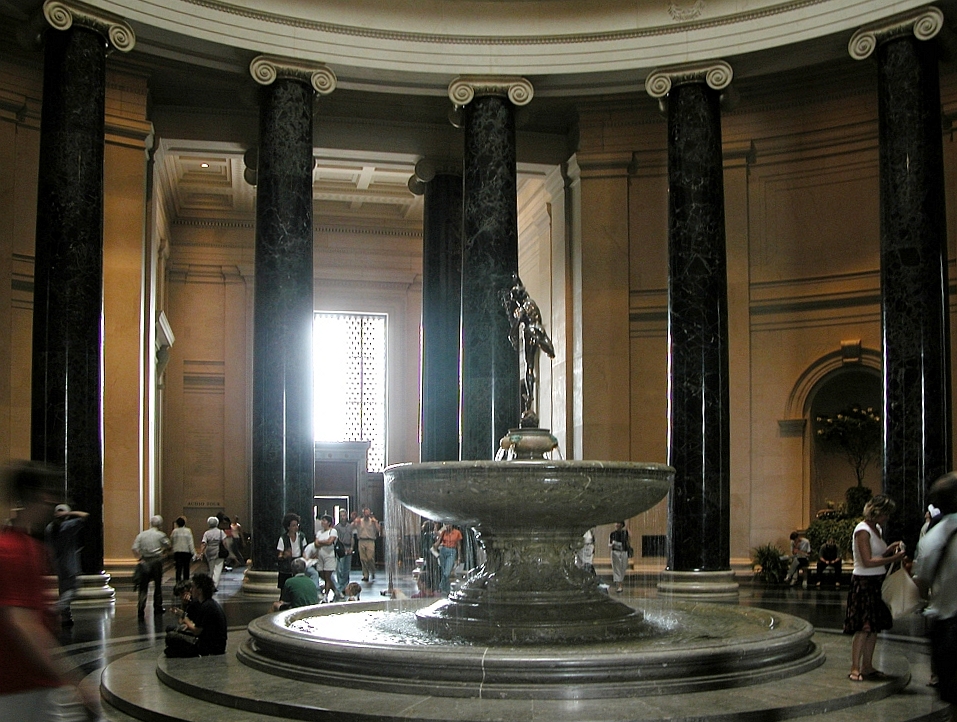
- National Gallery of Art, Washington, DC: admission is free, and passes or tickets are not required for galleries, exhibitions or guided tours. Some events require free registration. (nga.gov)
- The Met, New York: pay-what-you-wish admission applies to New York State residents and students from New York, New Jersey and Connecticut. Eligibility and online purchasing rules differ; this is not an unrestricted offer for every visitor. (metmuseum.org)
- Museums for All, United States: the program’s visitor page currently lists admission of $5 or less per person for up to four people per EBT card at participating museums. Bring a SNAP EBT card and photo ID, and confirm the venue’s booking procedure. The card demonstrates eligibility; admission must be paid by another method. (museums4all.org)
Check the documentation required for any concession, including residency or student discounts. Ask your library whether it offers a pass for your chosen museum, but do not build the plan around one until you have confirmed its terms and availability.
If you need a care partner, check that policy before purchasing both tickets. The Met lists complimentary care-partner admission for a visitor with a disability, with the ticket obtained in person. Other venues need their own check. (metmuseum.org)
Practical check: note the exact ticket type, eligibility evidence and purchase method in one place.
3. Check booking rules and cancellation terms before paying
A manageable plan should also be easy to understand at the entrance.
Before confirming a booking, answer these questions:
- Is advance booking required, recommended or unnecessary?
- Is the ticket valid for a specific day or entry time?
- Does your chosen exhibition need a separate reservation?
- What happens if you arrive late?
- Can you change the date, and is there a fee?
- What happens if you cancel—or the museum cancels?
- Can you leave for a break and return?
Booking rules are venue-specific. The Met says advance general-admission tickets are not required, while groups of ten or more must register ahead. (metmuseum.org)
Cancellation terms deserve a separate read. As one example, the Art Gallery of Ontario says ticket sales are final, refunds are limited to specified circumstances, and exchange fees may apply. It also states that it is not liable for travel expenses connected with a cancelled or postponed event. That is a venue policy, not a rule for all museums. (ago.ca)
Save your confirmation, the relevant terms and the museum’s official contact page. If a condition is unclear, ask visitor services before buying. Do not assume bad weather, a missed train or a change of plans will qualify for a refund.
4. Budget for the journey, not just the ticket
Use this planning formula:
Outing cost = admission + return transport or parking + planned food + optional extras
Fill it with verified costs for your date and circumstances. Until then, leave unknown amounts marked “to check.” A free ticket alone does not establish that the outing fits your budget.
Compare travel options by both cost and effort:
- Public transport: check the return service, transfers, step-free stations and disruption notices.
- Driving: confirm parking location, charges and the route from the parking space to the entrance.
- Drop-off or taxi: identify the correct entrance, particularly if the main entrance is not the one you need.
- Walking: consider crossings, surfaces, shelter and the return journey—not just distance.
The National Gallery of Art recommends public transportation and states that it has no campus parking garage, although limited parking is set aside for vehicles with disability permits or tags. This is a useful reminder to verify parking rather than assume it exists. (nga.gov)
To limit discretionary spending, decide whether the café and shop are part of your plan. You could eat before leaving or plan a meal afterward. If you want to bring food or drinks, check the museum’s rules and permitted eating areas first.
Include a modest arrival buffer of your choosing. Do not turn that buffer into extra galleries you feel obliged to visit.
5. Check the whole access route and your break options
Instead of relying on the word “accessible,” ask whether the museum’s facilities suit your particular visit.
Trace the route from arrival to entrance, gallery, toilet, break space and exit. Check:
- Step-free access: the entrance to use, lifts and any reported outages.
- Seating: benches in your chosen gallery, nearby seats, and whether portable stools are available.
- Queues: what assistance is offered if standing is difficult.
- Toilets: locations and the particular facilities you need, such as a companion-care toilet or changing equipment.
- Sensory conditions: flashing lights, sound installations, dark rooms, crowds and quieter spaces.
- Information formats: captions, transcripts, large print or audio descriptions.
- Loan equipment: availability, reservation rules and whether you need someone to assist you.
For example, The Met Fifth Avenue identifies accessible entrances at 81st Street and through its parking garage at 80th Street. It lists gallery seating, stools for visitors with disabilities and staff assistance for people unable to stand in an entry or exhibition line. (metmuseum.org)
The National Gallery of Art’s sensory guidance identifies blinking and sweeping lights in the moving-walkway installation between its buildings. It also notes loud automatic toilet flushes and hand dryers, and identifies family/companion-care restrooms. These are specific details worth checking—not reasons to assume every museum has the same conditions. (nga.gov)
If an essential detail is missing, send a focused question through the venue’s official contact channel:
“I’m planning a short visit to this gallery. Which step-free entrance should I use, where is the nearest suitable toilet, and is there seating nearby? Are there any current route closures?”
State the facility or assistance you need; you do not have to write a long explanation. If it cannot be confirmed, mark it as unknown and decide whether to choose another venue or postpone.
6. Try a one-gallery plan: a worked example
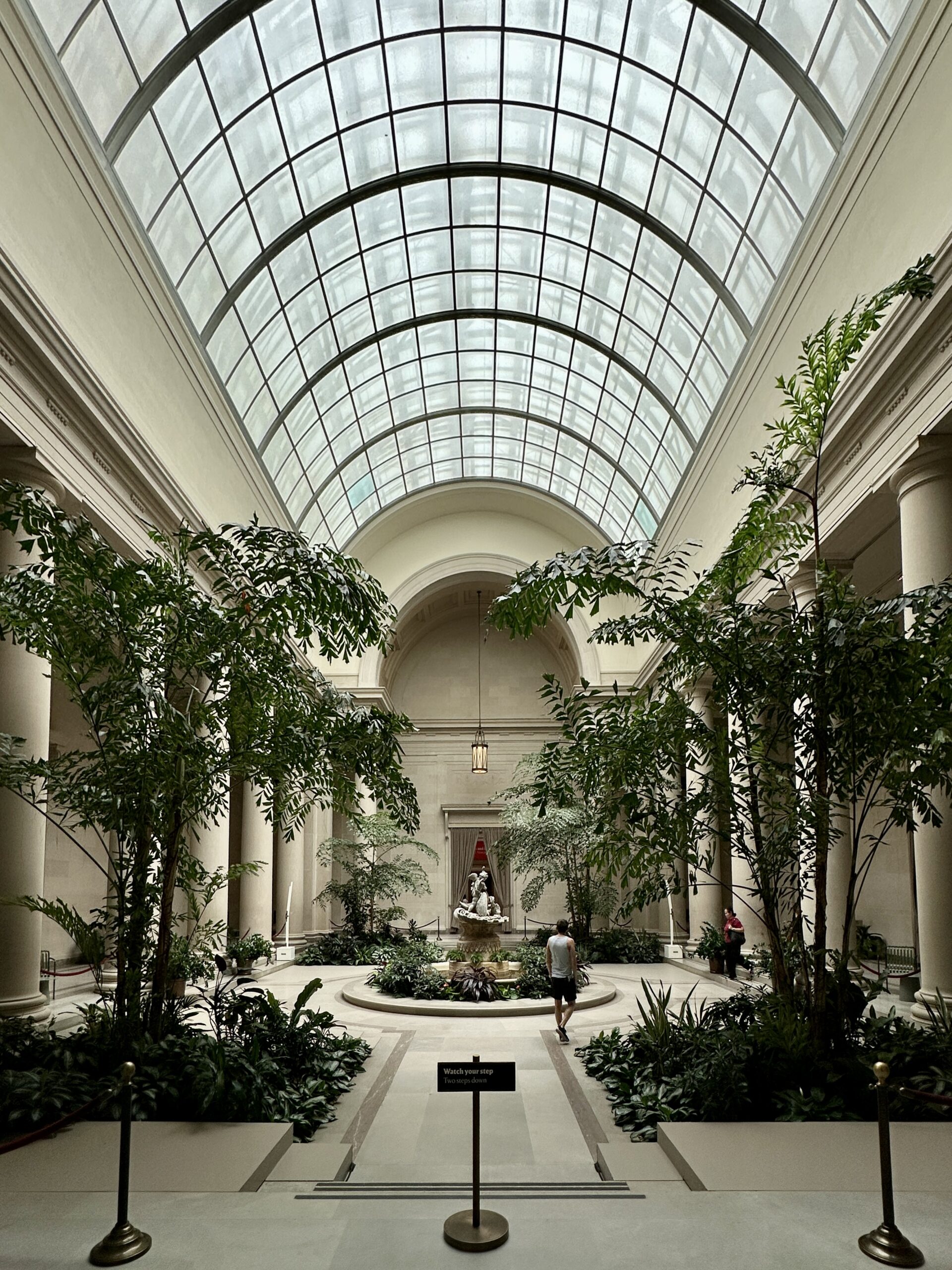
Here is an illustrative plan, not a tested itinerary, for a solo visitor or pair exploring one West Building gallery at the National Gallery of Art in Washington, DC.
The verified starting point is free admission without a general-entry ticket. Its visit page marks the West Building’s 6th Street entrance as accessible. Confirm current opening and route information before travelling. (nga.gov)
Before leaving
Choose a West Building subject that interests you. Ask staff or consult current gallery information to identify one suitable room. Confirm your travel cost and any essential seating or toilet arrangements.
Suggested time inside
| Stage | Suggested allowance | What to do |
|---|---|---|
| Arrive and orient yourself | 10 minutes | Find the room, toilets and a break location |
| Explore one gallery | 25 minutes | Choose three works rather than studying everything |
| Take a break | 10 minutes | Pause in a confirmed seating area |
| Finish and leave | 10 minutes | Revisit one favourite or go directly to the exit |
These allowances total 55 minutes. They are adjustable suggestions, not measured queue, walking or viewing times.
For each chosen work:
- Look before reading the label.
- Notice one detail: a colour, shape, expression or material.
- Read the label if you want context.
- Ask, “What changed when I looked again?”
With a companion, take turns choosing. With children, offer a simple prompt such as finding a repeated shape; there is no need to make it a quiz.
Shorter option: go to the same gallery, choose one work, look closely and leave. Allow extra time for entry and getting around, but drop the optional viewing—not the facilities you need.
Cost check: verified admission is $0. Add your actual return travel, any parking and whatever you choose to spend on food. No total is claimed here because those costs depend on your journey.

7. Recheck the essentials—and keep an at-home alternative
On the day, make a final check of opening notices, transport disruptions, your booking and the route you need. If circumstances have changed, use the cancellation procedure you saved rather than assuming you can simply move the booking.
Common planning mistakes include:
- Using an old free-entry listing: recheck eligibility on the official admission page.
- Trying to “get your money’s worth” through endurance: stick to the small purpose you chose.
- Treating loan equipment as guaranteed: confirm availability and have a workable alternative.
- Planning a break somewhere unsuitable: verify seating, food rules and re-entry.
- Adding every companion’s preference: agree on one shared activity and make extras optional.
- Ignoring the return journey: preserve enough time and energy to get home.
If travel or weather disrupts the outing, try a small online museum session instead. The National Gallery of Art’s artwork search lets you search by title, artist, movement or accession number. (nga.gov)
Choose one artist or subject, open three works and spend a suggested 15–20 minutes comparing them. Look for one similarity and one difference, then save a favourite to investigate another day.
The useful next step is small: pick one museum, open its admission and accessibility pages, and identify one gallery you would enjoy. You can decide whether to go after the practical details are clear.