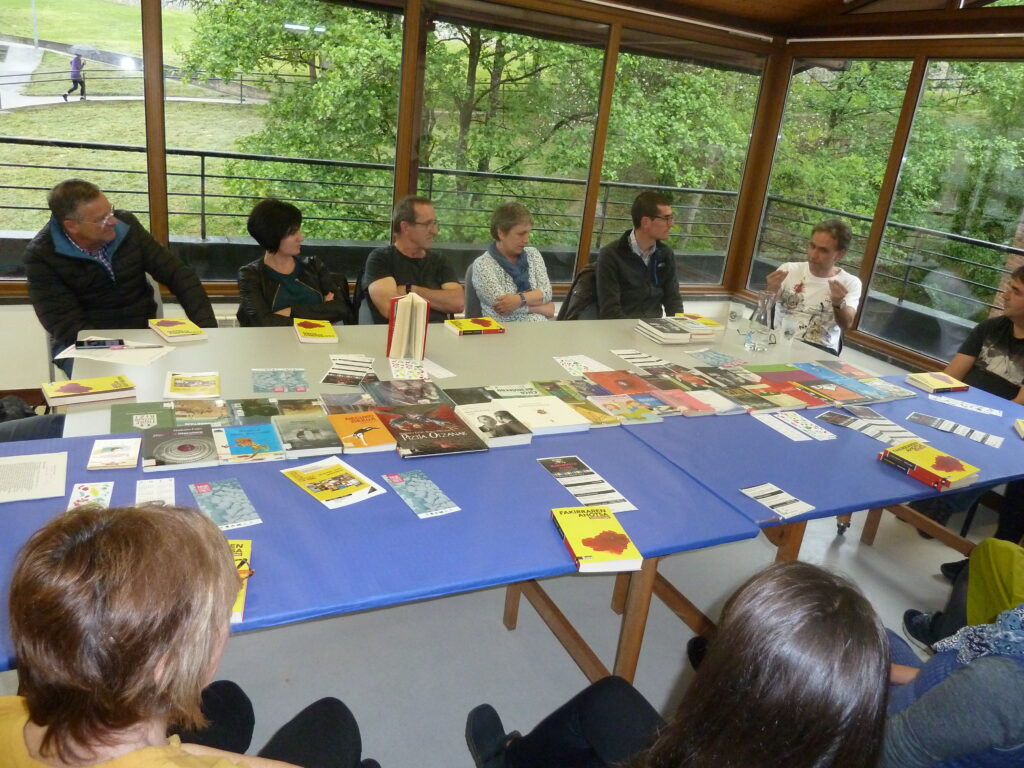
Quick answer: Invite a few people to try one meeting, choose something everyone can obtain affordably, and agree on spoiler boundaries before reading. Make unfinished readers welcome, prepare three optional questions, and set a clear finishing time. A short story is a perfectly good first choice; you do not need to begin with a novel.
1. Choose a format before choosing a book
Start by asking what people want from the gathering: a shared reading experience, a chance to discover books, or simply some book-shaped conversation.
For a first attempt, consider these formats:
- One shared book: Everyone reads or listens to the same work, with a meeting date agreed in advance.
- One short story or essay: Everyone discusses a smaller piece rather than committing to a whole book.
- Bring your own reading: Each person talks briefly about something they have read. This removes the need to obtain matching copies.
- Shared reading time: Meet to read quietly, then have an optional conversation about what caught your attention.
Treat the first gathering as a trial, not a subscription. An invitation to “try one book evening” is a smaller commitment than joining an indefinite monthly club.
For a shared book, decide how selections will work. Penguin Random House suggests either rotating choices or gathering suggestions and voting, while giving members a say. For your trial, ask for two possibilities and choose only after checking access. (penguinrandomhouse.com)
You need no literary qualifications, matching notebooks or elaborate hosting. Your basic materials are the reading, a way to communicate, and somewhere to meet.
2. Check copies and budgets before committing
Ask privately: “Would you prefer a library copy, something you already own, or a purchase within a limit you choose?” Do not assume everyone wants to buy each selection.
A useful order is:
- Check the local library’s book-group services.
- Check individual print, ebook and audiobook availability.
- Ask whether anyone already owns a copy they want to lend.
- Consider purchases only if members are comfortable with them.
Library book-group kits are worth investigating. As one specific example, Washington’s King County Library System offers kits containing 10 copies of one book, with an eight-week loan period and advance reservations. Those are that system’s rules—not a promise about your local library. (kcls.org)
Ask your library about eligibility, available dates, collection arrangements, loan length, renewals and responsibility for missing items. KCLS, for example, does not renew these kits and requires returns at a service desk, with the tote and copies together; replacement charges can apply. (kcls.org)
Digital does not necessarily mean immediately available. OverDrive’s documentation describes waitlists when all copies of a title are checked out. Check each reader’s access before fixing the meeting date. (developer.overdrive.com)
Make spending optional. Transport, refreshments, venue charges and book purchases should be discussed separately rather than quietly becoming membership requirements.
3. Set a reading window, not a reading quota
Ask people how much reading they realistically want to take on. Avoid making the fastest reader’s preference the group’s default.
For a trial, offer a choice such as:
- A short piece with a meeting in a couple of weeks.
- A longer work with more time.
- A book divided across meetings, using agreed chapter boundaries.
These are planning options, not estimates of how quickly someone should read. Length alone should not determine your schedule; invite members to look at a sample and decide whether the choice feels manageable.
Welcome print, ebooks and audiobooks equally. If the group wants to discuss the same complete work, ask audiobook users to check whether their edition is unabridged. Use chapter names or scene descriptions when discussing passages rather than assuming everyone has matching page numbers.
Send one practical reminder with the date, reading boundary and access details. Skip progress reports unless members specifically want them.
If several people cannot get the book in time, change the selection or the date. Do not make buying a copy the automatic solution to a borrowing problem.
4. Make spoiler rules and unfinished-reader welcome explicit
“Come even if you haven’t finished” needs a matching spoiler policy. Otherwise, someone may arrive expecting a friendly introduction and leave knowing the ending.
Choose one arrangement before the meeting:
- Boundary discussion: Talk only through an agreed chapter or section.
- Two-part meeting: Begin without later plot details, then announce a full-spoiler discussion.
- Full-spoiler meeting: Unfinished readers are welcome, but everyone knows the entire work may be discussed.
For a two-part meeting, a clear announcement could be:
“We’re moving to the ending now. You’re welcome to stay, leave, or return for the final planning chat.”
Do not ask unfinished readers to publicly explain themselves. Offer questions they can answer from what they have encountered: “What impression did the opening give you?” or “Was there anything that made you want to continue?”
Keep the group message thread within the same boundary. Even a celebratory comment about a character can reveal more than intended.
Allow listening without speaking, passing on a question, and deciding not to finish a book. Those are participation choices, not reasons to lose an invitation.
5. Prepare three prompts, not a worksheet
A host needs a way to begin, not a lesson plan.
Publisher discussion guides can provide starting points. Penguin Random House Library Marketing has a searchable guides collection that defaults to title-specific discussion guides. Look for your selection, then choose questions that suit your group rather than assigning the entire guide. (penguinrandomhouselibrary.com)
For a simple discussion, try three original prompts:
- What stayed with you, and what made it memorable?
- Which decision, argument or scene would you like to question?
- Did your impression change as you read or listened?
For nonfiction, ask: “Which idea would you want to investigate further?” For a short story, try: “What does the writer leave us to work out?”
Make notes optional. Nobody needs a polished interpretation or a quotation ready to earn their place.
If the conversation stalls, ask someone to describe a scene before interpreting it. If opinions differ, ask what in the text led each person there. Avoid turning disagreement about a book into a judgment about the reader.
Give everyone an opening without forcing a round-robin performance: “Would anyone who hasn’t spoken like to add something? Passing is fine.”
6. Arrange a meeting people can actually join
Ask what would make participation easier, and let people respond privately. Do not require anyone to disclose a diagnosis or justify a preference.
For an in-person gathering, check:
- Step-free entry and the route to the meeting space.
- Seating options, accessible restrooms and room layout.
- Noise, lighting, transport and parking.
- Booking requirements, charges and cancellation terms.
- Whether food is allowed or purchases are expected.
Verify details with the actual venue. A library meeting room or someone’s home should not be assumed suitable merely because it sounds convenient.
For an online meeting, send the joining information and prompts beforehand. Offer a brief practice connection, allow cameras to stay off, and agree that people can contribute through chat.
Check the platform’s accessibility features and the host’s settings. Zoom supports automated captions, but its documentation warns that accuracy varies with factors including background noise and speech clarity. Do not assume automatic captions meet everyone’s needs; ask whether different support is required. (support.zoom.com)
Also check the account’s meeting limit. Zoom Basic-hosted meetings are generally limited to 40 minutes, so plan a shorter session or use an arrangement that supports your intended duration. (support.zoom.com)
If you try a hybrid gathering, appoint someone to watch chat and invite remote participants into the conversation.

7. Send a clear invitation and use a short agenda
Here is a sample invitation to adapt:
Would you like to try one relaxed book-group meeting? We’ll choose a short story or book after checking that everyone can get a suitable copy.
Proposed date and time: [details]
Place or online joining arrangement: [details]
Reading and spoiler boundary: [details]No notes or finished reading required. You can listen or pass on questions. We’ll end at [time], and bringing food is optional.
Please tell me privately about copy preferences or anything that would make joining easier.
A suggested 35-minute agenda leaves a little room within a 40-minute platform limit:
| Time | Plan |
|---|---|
| First 5 minutes | Welcome, joining checks and spoiler reminder |
| Next 10 minutes | First impressions within the agreed boundary |
| Next 15 minutes | Two or three prompts; optional full-spoiler discussion if announced |
| Final 5 minutes | Decide whether to meet again and check copy-return plans |
For an in-person meeting, extend the social time if people want it—but keep the promised discussion finish.
Avoid three common traps: requiring themed food, letting one person answer every question, and choosing the next book before checking availability. Keep hosting tasks small and volunteer-based.
8. Try this worked example, then adjust
Imagine five friends want to try a shared book. They are eligible to borrow a KCLS kit and confirm that their chosen title is reservable. The eight-week, nonrenewable loan gives them a fixed return deadline to plan around. (kcls.org)
Here is an illustrative plan, not a tested result:
- One volunteer checks out the kit and records who has each copy.
- They choose a meeting in week six, leaving time to collect and return copies.
- The invitation states that the opening discussion stops at an agreed chapter.
- Later plot details are discussed only after a clear announcement.
- The host prepares three questions; nobody submits notes.
- At the end, they decide whether another gathering sounds enjoyable.
If members want something smaller next time, choose one short story from a collection they can each obtain, an essay on the author’s or publisher’s website, or a bring-your-own-reading evening. Share a legitimate source link rather than circulating an unauthorized scan.
Before arranging the second meeting, ask just three questions: Was the reading manageable? Could everyone join comfortably? What should we change?
Change one thing—perhaps the length, location or spoiler arrangement—rather than writing a rulebook. Your next step can be as small as asking a few friends whether they would enjoy one trial evening.